Every perfectly shaped brow begins with precise mapping. This foundational skill ensures symmetry, balance, and flattering results regardless of the shaping method you use—waxing, threading, tweezing, or preparing for semi-permanent makeup. Understanding brow mapping principles allows you to create consistently beautiful brows that complement each client’s unique facial features rather than applying a one-size-fits-all approach.
Brow mapping isn’t about creating identical brows on every face—it’s about understanding proportions and facial landmarks that guide you to the ideal brow shape for each individual client. According to GOV.UK data on personal services, brow services remain consistently popular across the UK as clients recognise the transformative power of well-shaped, properly proportioned brows.
At UK Beauty School, our Certificate in Eyebrow, Facial Waxing and Tinting teaches professional brow techniques including mapping fundamentals that ensure flattering results for every client.
Understanding Brow Mapping
What Is Brow Mapping?
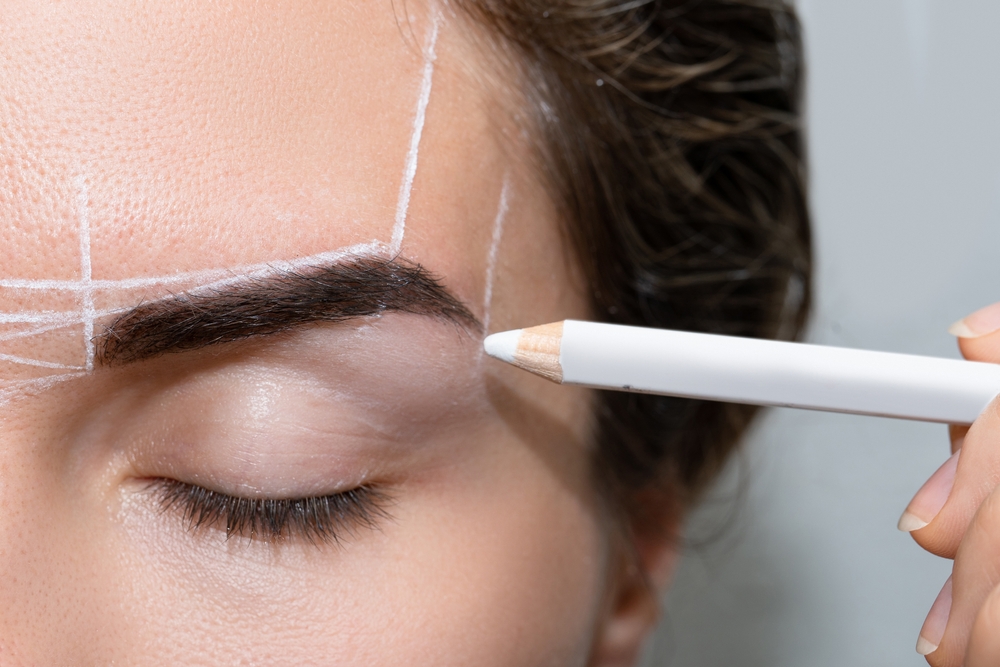
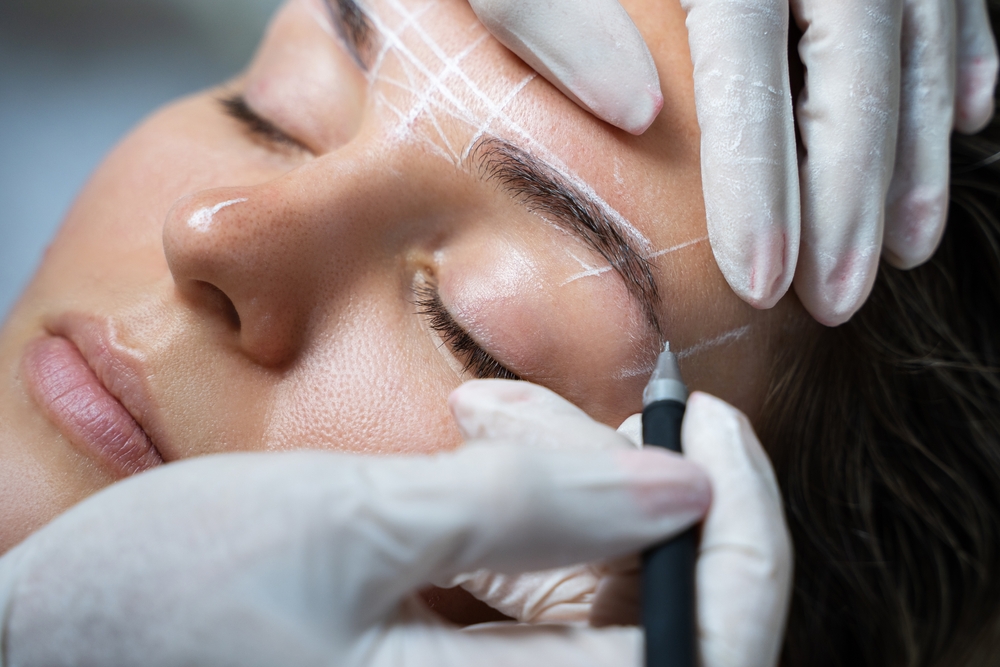
Brow mapping is a measurement technique used to identify the ideal start point, arch position, and end point for brows based on facial proportions and anatomical landmarks. Using reference points (typically the nose and eye), technicians establish guidelines that ensure balanced, symmetrical, flattering results.
Why Mapping Matters: Ensures consistent, professional results across all your clients. Creates visual symmetry between brows that looks intentional and polished. Guides removal of correct hairs only—protecting brow shape integrity. Prevents the over-tweezing disasters that take months to grow out. Provides client confidence through visible, professional measurement process.
The Golden Ratio Principle
Brow mapping often references the “golden ratio”—mathematical proportions found throughout nature that humans perceive as inherently beautiful and harmonious. Whilst strict golden ratio application isn’t always appropriate for every face, the underlying principles inform pleasing brow proportions.
Key proportions to consider include brow length relative to eye width, arch position relative to facial landmarks, brow height relative to facial dimensions, and spacing between brows relative to nose width.
The Three Essential Points
Point 1: The Start
Location: Where the brow should begin, typically aligned with the inner corner of the eye.
Finding It: Hold a straight edge (mapping tool, pencil, or string) vertically from the outer edge of the nostril, passing alongside the inner corner of the eye. Where this line intersects the brow line is the ideal start point.
Considerations: Some technicians prefer measuring from the centre of the nostril for a slightly closer-set start. Others use the outer nostril edge for a slightly wider-set start. Face shape, eye position, and personal preference influence which reference point creates better balance for each individual client.
Point 2: The Arch
Location: The highest point of the brow—where the brow changes direction from ascending to descending.
Finding It: Hold a straight edge from the outer nostril, angled through the centre of the pupil whilst the client looks straight ahead. Where this line intersects the brow is the optimal arch position.
Alternative Method: Some technicians measure from the outer nostril through the outer edge of the iris for a slightly more extended, dramatic arch position.
Considerations: Arch position dramatically affects facial expression and perception. Too far inward creates a perpetually surprised look. Too far outward can look dated or unbalanced. Adjust based on client preference, natural growth patterns, and face shape.
Point 3: The End
Location: Where the brow should terminate for optimal balance.
Finding It: Hold a straight edge from the outer nostril, angled through the outer corner of the eye. Where this line intersects the brow line is the ideal end point.
Considerations: The end should typically be at or slightly above the level of the start point—never significantly below, which creates a droopy, sad appearance. Extending slightly beyond the outer eye corner often looks most flattering and opens up the eye area.
Mapping Methods
String Mapping
Using measured string or thread to create physical guidelines visible on the skin.
Process: Measure and mark all three points using string dipped in pigment or brow pencil. Create connecting lines to visualise the complete brow shape before any hair removal. Adjust as needed until both you and the client approve the mapped shape.
Advantages: Creates visible guidelines for both technician and client to review. Provides precise measurements that can be verified. Presents professionally and builds client confidence.
Pencil/Tool Mapping
Using a straight tool held against facial landmarks for quick assessment.
Process: Hold mapping tool against reference points (nostril, eye corners, pupil). Mark points on skin with brow pencil. Connect points to create visual guidelines.
Advantages: Quick to perform during consultations. No additional supplies needed. Easy to adjust and refine.
Digital Mapping
Using apps or digital tools to overlay ideal brow shapes on photographs.
Process: Photograph client’s face straight on with good lighting. Use software to analyse proportions and suggest ideal shape. Reference digital map during the shaping appointment.
Advantages: Visual communication tool clients understand immediately. Technology-forward presentation that appeals to some demographics. Can save maps for client records.
Adjusting for Face Shapes
Oval Face
Often considered the “ideal” proportions, oval faces suit most brow shapes without much adjustment needed.
Recommendations: Soft angled brows that follow natural bone structure. Avoid extremes—neither too flat nor too dramatically arched.
Round Face
Rounder faces benefit from brows that add angles and visual length to balance the circular shape.
Recommendations: Higher, more angled arches add definition and structure. Avoid rounded brow shapes that echo and emphasise the face shape.
Square Face
Strong jawlines and foreheads suit brows that soften the angular features.
Recommendations: Softer, curved shapes that balance strong facial angles. Avoid very angular or harsh brow shapes that emphasise squareness.
Heart Face
Wider foreheads with narrower chins need balanced brows that don’t add visual weight up top.
Recommendations: Soft, curved shapes that don’t add width at the forehead. Rounded arches rather than sharp peaks that draw attention upward.
Long Face
Elongated faces benefit from brows that add horizontal dimension to visually widen the face.
Recommendations: Flatter, more horizontal brows that visually widen. Avoid very arched shapes that add vertical length and elongate further.
Practical Application
Client Consultation
Before Mapping: Discuss client preferences openly and show examples. Assess natural brow growth patterns and condition. Consider lifestyle, maintenance preferences, and daily makeup habits.
During Mapping: Explain each measurement as you make it so clients understand. Show client the mapped points in a mirror. Confirm the shape before any hair removal begins.
Common Mapping Mistakes
Ignoring Natural Growth: Maps should work with existing brow shape where possible, not force an unnatural shape the client can’t maintain.
Over-Reliance on Rules: Mapping provides guidelines, not rigid rules. Adjust for individual features, preferences, and practical considerations.
Asymmetrical Mapping: Faces are naturally asymmetrical. Brows don’t need to be identical—they should be “sisters, not twins”—but should be balanced.
Client Disconnection: Failing to show and explain mapping to clients leads to miscommunication and disappointment.
Working with Asymmetry
All faces have some natural asymmetry—one eye slightly higher, one brow naturally fuller. Rather than forcing identical brows that fight natural asymmetry, work to create balance. Determine which brow has the better shape and use it as the template. Adjust the other brow to complement, acknowledging that small differences are normal and acceptable.
Mapping for Different Services
For Waxing/Threading
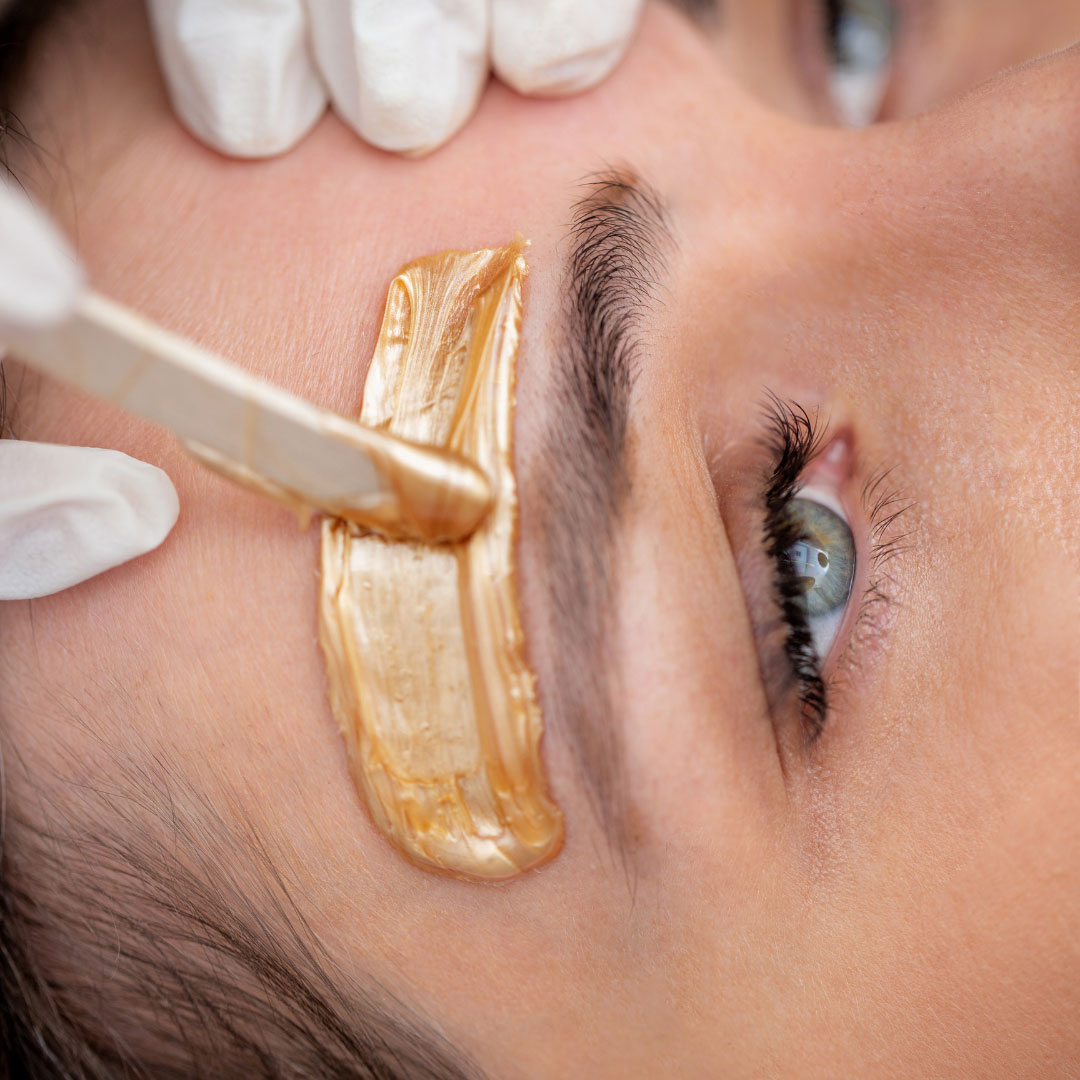
Map before any hair removal begins. Use mapped points to guide where to remove hair and where to preserve. Regularly check against your map during the removal process.
For Brow Lamination
Map to determine ideal hair direction. Use mapped arch position to guide brushing direction during processing. Ensure the laminated shape follows mapped guidelines.
For Semi-Permanent Makeup
Precise mapping is absolutely critical—permanent results demand accuracy. Use multiple mapping methods to confirm placement. Have client approve mapped shape in writing before proceeding with any pigment application.
At UK Beauty School, our Certificate in Eyebrow, Facial Waxing and Tinting teaches brow mapping as a foundational skill for all professional brow services.
Ready to create consistently perfect brows? Our brow courses teach mapping fundamentals that ensure flattering results for every face. Master the principles of proportion and balance that guide professional brow shaping. Explore our courses today and build your brow expertise.