A mobile spray tan business is one of the most accessible self-employment models in the UK beauty industry. The startup investment is modest — a portable machine, spray tent, solution range, and client consumables can be assembled for under £500 — the training timeline is short, and the demand for mobile tanning services is strong across the UK throughout the year. For practitioners who want to run their own business with minimal overhead, flexible hours, and genuine earning potential, mobile spray tan is an excellent model.
This guide covers every aspect of launching and building a successful mobile spray tan business in the UK, from getting qualified and selecting your equipment through to building your first client base and scaling your bookings.
Getting Qualified
A professional spray tan qualification is the essential starting point. As a mobile technician working in clients’ homes, you need the product knowledge, application technique, and safety understanding that come from proper training — not simply watching tutorials online. A professional certification is also required by reputable UK beauty insurance providers as the basis for professional liability coverage, which is non-negotiable for any business involving treatments on paying clients.
Online spray tan courses in the UK can be completed in two to four weeks of consistent study. Look for a course that covers DHA chemistry, solution formulation, application technique, health and safety (including inhalation prevention, contra-indications, and client preparation), and aftercare advice.
Mobile Equipment Requirements
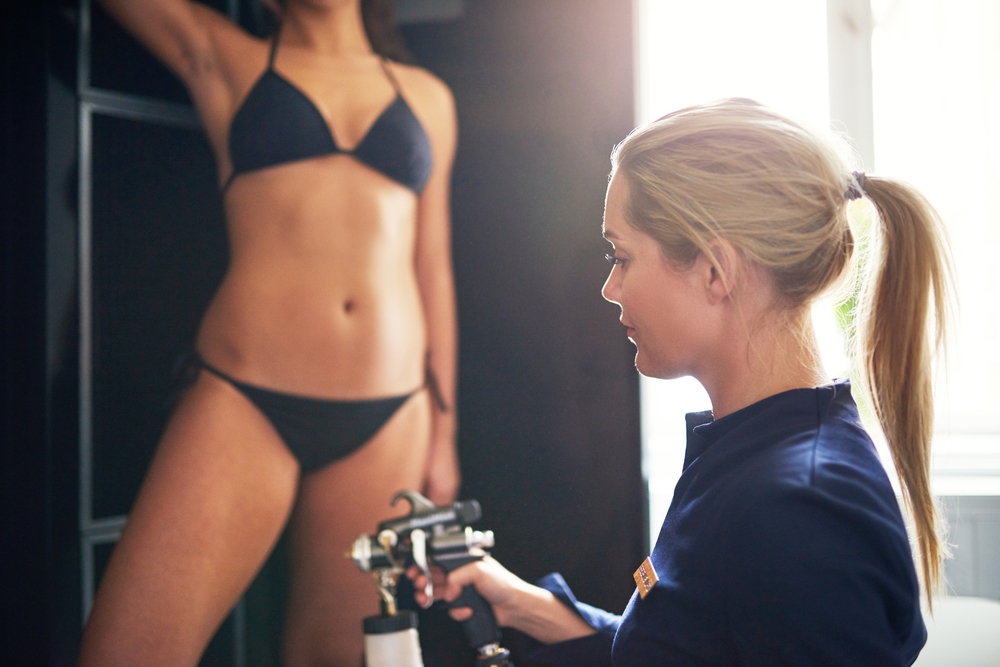
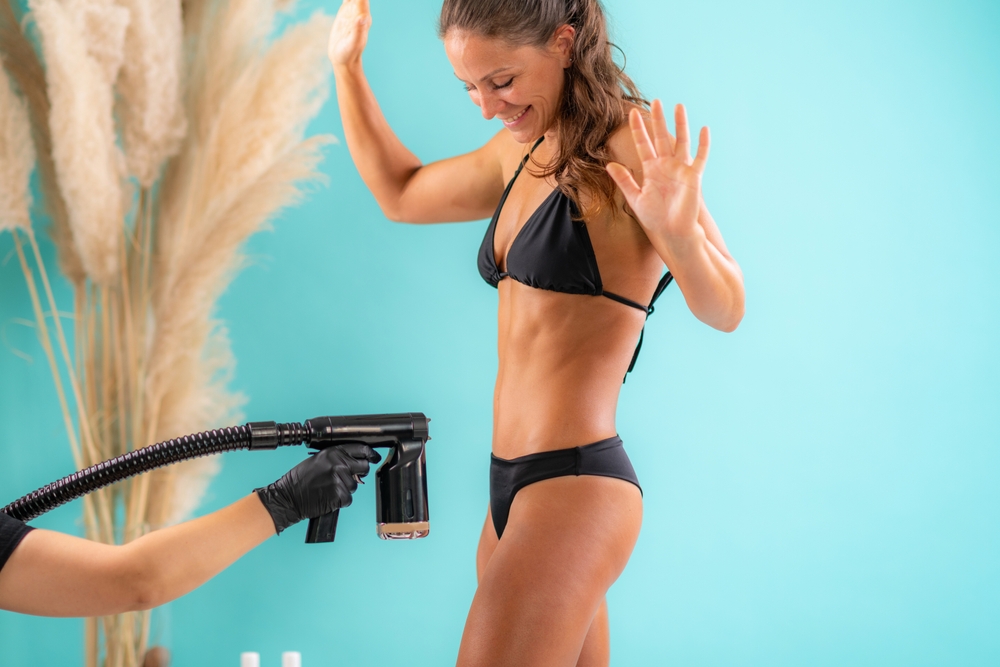
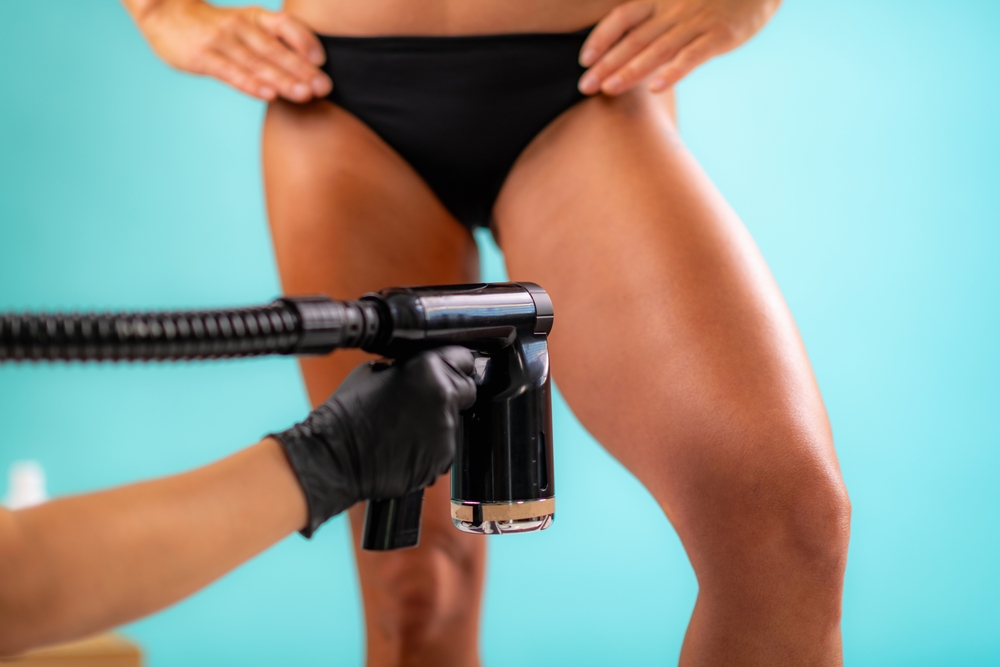
The core mobile spray tan equipment kit consists of: an HVLP spray tan machine (look for lightweight, quiet models specifically designed for mobile use — they generate less noise than salon machines and are more comfortable for use in domestic spaces), a pop-up spray tan tent (collapsible to carry, quick to set up, essential for protecting client’s home surfaces from overspray), a portable LED lamp for working in poorly lit rooms, client disposables (disposal feet protectors, body wipes, ear protectors, and hair nets), and your solution range.
Battery-powered machines are available for technicians who want complete flexibility from mains power, though most mobile practitioners find a standard corded machine perfectly practical. The total mobile kit investment for quality professional equipment is typically £300 to £600, with solutions adding an ongoing product cost per treatment of approximately £3 to £8 depending on solution quality and brand.
Setting Your Prices
Mobile spray tan pricing in the UK typically ranges from £25 to £45 for a standard treatment, with a travel supplement of £5 to £20 depending on distance from your base. In London and major city markets, mobile spray tan practitioners charge £35 to £55 for a standard treatment. Group bookings — typically three or more clients at the same location — are priced at a group rate that reduces the per-person cost slightly while increasing the total booking value significantly.
Price from the start in the professional range for your market. Mobile spray tan services deliver a genuine premium client experience — professional treatment at home without the need to travel or change clothes afterwards — and that experience justifies professional pricing. The National Hair and Beauty Federation advises that beauty practitioners who price within the professional range from the outset build more sustainable businesses and attract higher-quality clients than those who use below-market pricing to build initial volume.
Finding Your First Clients
Instagram is the most effective first marketing channel for a mobile spray tan business in the UK. Set up a business account before you begin taking clients, post before-and-after photographs of your practice clients, tag your location clearly, and use locally relevant hashtags. A geo-tagged Instagram presence with consistent before-and-after content generates organic enquiries from exactly the clients you want to attract.
Group booking relationships are the single most valuable business development activity for a mobile spray tan technician. Make contact with local bridal shops, wedding venues, hen party organisers, and personal trainers whose clients might be interested in pre-competition tanning. On the client education side, Allure is one of the most widely read references for spray tan and self-tanner guidance — understanding what clients read before booking helps you frame the advantages of professional application in language that resonates with their existing knowledge.
Managing Group Bookings
Group bookings are the highest-revenue appointments in a mobile spray tan business. An evening booking for a hen party of eight clients at £35 per person generates £280 from a two-to-three-hour visit. Managing group bookings effectively — confirming preparation requirements in advance, setting up efficiently, maintaining a steady rhythm through the group, and ensuring every client’s aftercare questions are answered before you leave — determines whether group clients rebook and refer others.
On the safety side, Healthline notes that DHA-based spray tanning is considered safe for skin contact when applied correctly with appropriate inhalation precautions — a reassurance worth sharing with first-time clients who have questions about the product. Keeping a well-ventilated workspace and using nose filters for both yourself and clients covers this requirement in every setting.
If you are registering as a self-employed business, GOV.UK provides the definitive guide to self-employment in the UK — covering tax registration, National Insurance obligations, and record-keeping requirements that apply from your first paid client.
Our Certificate in Spray Tanning is the starting qualification for a UK mobile spray tan career. For detailed technique guidance, our article on how to avoid streaky spray tans is recommended reading. Client aftercare is covered in our article on spray tan aftercare: your complete client guide.